
How Artificial Intelligence Is Transforming Freight Transportation
The logistics and transportation industry — the backbone of the global economy — has long faced complex challenges such as demand uncertainty, inefficient routing, fuel cost volatility, and intricate inventory management. With the advent of Artificial Intelligence (AI), particularly its subfields like Machine Learning (ML) and Reinforcement Learning (RL), the industry is on the brink of a paradigm shift — one that transforms logistics from a reactive activity into a proactive, predictive, and fully optimized system. This transformation is taking place as AI integrates into every stage of the supply chain — from initial forecasting to final delivery.
1. Accurate Demand Forecasting and Inventory Management: Tackling the Bullwhip Effect
One of the oldest and most costly issues in the supply chain is the Bullwhip Effect, where small fluctuations in consumer demand amplify dramatically upstream among manufacturers and suppliers. This leads to either overstocking or stockouts, both of which impose significant financial burdens.
AI, particularly through ML models, addresses this by analyzing massive, multidimensional datasets and detecting complex patterns that traditional statistical methods could not capture. ML architectures such as Recurrent Neural Networks (RNNs) and Transformer-based models not only consider historical sales data but also incorporate real-time external factors — social media trends, regional weather conditions, local events, competitors’ marketing campaigns, and macroeconomic indicators.
These models can forecast future demand with high precision at the SKU and regional levels, enabling AI-driven inventory systems to optimize safety stock, automate purchase orders at the optimal time, and reduce the need for maintaining large quantities across multiple warehouses. This not only frees up working capital but also minimizes waste from product obsolescence.
Moreover, ML algorithms can model interdependencies among suppliers and dynamically distribute orders so that small disruptions in one node do not cascade through the network — effectively suppressing the Bullwhip Effect at its source.
2. Route Optimization and Fuel Efficiency: The Reinforcement Learning Revolution
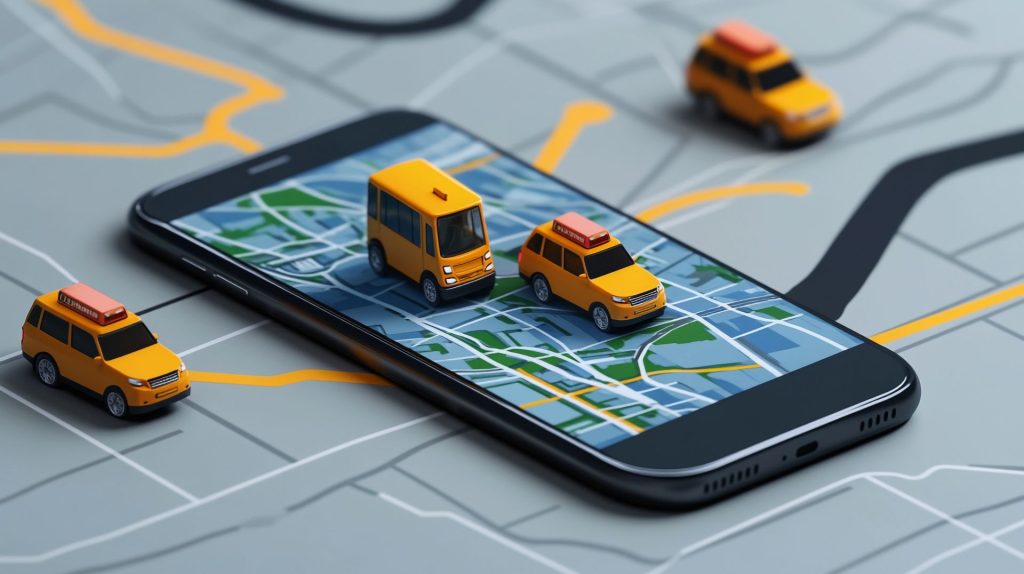
Fleet routing and transportation optimization form the core of logistics operations, directly affecting both operational costs and delivery reliability. This challenge is often modeled as a Traveling Salesman Problem (TSP) or, more generally, a Vehicle Routing Problem (VRP) — both of which are computationally intensive for large networks.
Reinforcement Learning (RL) introduces an entirely new paradigm. Unlike traditional optimization methods that rely on fixed cost functions, RL allows an “agent” to learn through continuous interaction with the environment — the road network, live traffic, and vehicle capacity constraints — to make the best sequential decisions for maximizing long-term rewards (e.g., minimizing total time and cost).
Using Deep Q-Networks (DQN) or Actor-Critic methods, RL-based systems develop dynamic routing strategies that adapt in real time. These agents can model not only current traffic conditions but also forecast hourly traffic patterns based on historical data and scheduled events (such as sporting matches or holidays).
For instance, an RL agent may recognize that although Route A is currently faster, a predicted surge in congestion in 20 minutes due to a highway closure makes Route B the more efficient long-term choice. This dynamic optimization significantly reduces total travel distance and fuel consumption.
Additionally, RL frameworks can simultaneously account for fuel limitations, driver rest requirements (legal working hours), and customer delivery priorities, achieving unprecedented levels of operational efficiency.
ChatGPT said:
3. Automated Warehousing and Robotics: Efficiency Through Perception
Warehouses and distribution centers (DCs) are filled with repetitive, labor-intensive tasks traditionally performed by humans, such as searching, picking, packing, and moving pallets. AI, integrated with advanced robotics, is transforming this domain. At the heart of this revolution is Machine Vision. Cameras equipped with depth sensors (like LiDAR and structured light sensors) capture precise 3D data of the warehouse environment. Deep learning algorithms (such as Convolutional Neural Networks, CNNs) use this data to:
a) Object Identification and Localization: Robots can quickly and accurately locate items on crowded shelves, even if objects are at different angles or partially obscured.
b) Quality Control: Machine vision systems can detect damaged packaging, incorrect labels, or defective products before shipping.
c) Robot Motion Planning: AI plans the movement of robotic arms and Autonomous Mobile Robots (AMRs) to avoid collisions with each other or human workers.
AI-powered robotics is especially impressive in picking operations. Robots equipped with advanced arms use reinforcement learning to learn how to grasp items of different shapes and weights. Instead of manually programming every SKU, the system learns through thousands of virtual trials how to handle each type of object — from a soft powder bag to a heavy box — using the right grip force and angle. During packing, AI precisely measures the dimensions of items and automatically selects the best box size and appropriate filler materials (like air cushions), significantly reducing packaging costs, material waste, and space occupied in shipping containers.
4. Predictive Risk Analytics: Moving Beyond Reactivity
Modern global supply chains are exposed to multiple risks: natural disasters, geopolitical disruptions, labor strikes, sudden regulatory changes, and infrastructure issues (like bridge failures or heavy traffic). Traditionally, logistics reacted to these events, with teams scrambling to find alternatives after problems occurred. AI, especially deep learning-based predictive models, enables risk identification before events occur. These systems, often called “supply chain intelligence engines,” monitor a wide variety of data sources: satellite imagery for severe weather patterns, global news feeds for political instability, real-time traffic data, and historical performance data from various customs offices.
When a hazardous pattern is detected (e.g., a high probability of heavy rain along a key shipping route or increased customs inspections at a port), ML algorithms automatically calculate risk levels for each shipment in transit. Predictive analytics allows managers to take intervention measures: high-risk shipments may be rerouted automatically, delivery times updated, and additional digital documents prepared to expedite customs processing. These systems go beyond alerts; they recommend corrective actions. For instance, if a ship faces weather-related delays, AI may suggest transferring critical cargo to a smaller air container for faster delivery, or dispatch a truck to cover delivery at an intermediate port. This predictive capability greatly enhances supply chain resilience.
5. Last-Mile Logistics: Automating the Final Delivery
Last-mile logistics, the stage of delivering goods from a local distribution center to the end customer, is often the most expensive and inefficient part of the supply chain, accounting for up to 50% of total transportation costs. AI is transforming this phase through fully or semi-autonomous delivery vehicles and systems.
Drones and Ground Autonomous Vehicles (UGVs): For light, rapid deliveries in low-density or rural areas, drones managed via AI-based centralized control are emerging. AI manages low-altitude air traffic, ensures adherence to flight zones, and optimizes battery usage. Flight paths are adjusted in real time based on local weather and unexpected obstacles. In urban areas, ground delivery robots (similar to smart scooters) handle short- to medium-distance deliveries. These robots use SLAM (Simultaneous Localization and Mapping) techniques to navigate sidewalks safely, avoid pedestrians, and bypass moving obstacles. AI ensures that these robots efficiently batch deliveries and optimize their routes based on clustered delivery points.
Supervised Autonomy: Often, deliveries are not fully autonomous but are supervised by a centralized human operator. AI handles daily guidance and emergency management, while the operator intervenes in complex scenarios beyond the robot’s learning capacity (e.g., locating an address in a large complex or verifying customer identity). This hybrid approach ensures delivery flexibility while maintaining the efficiency gains of automation.